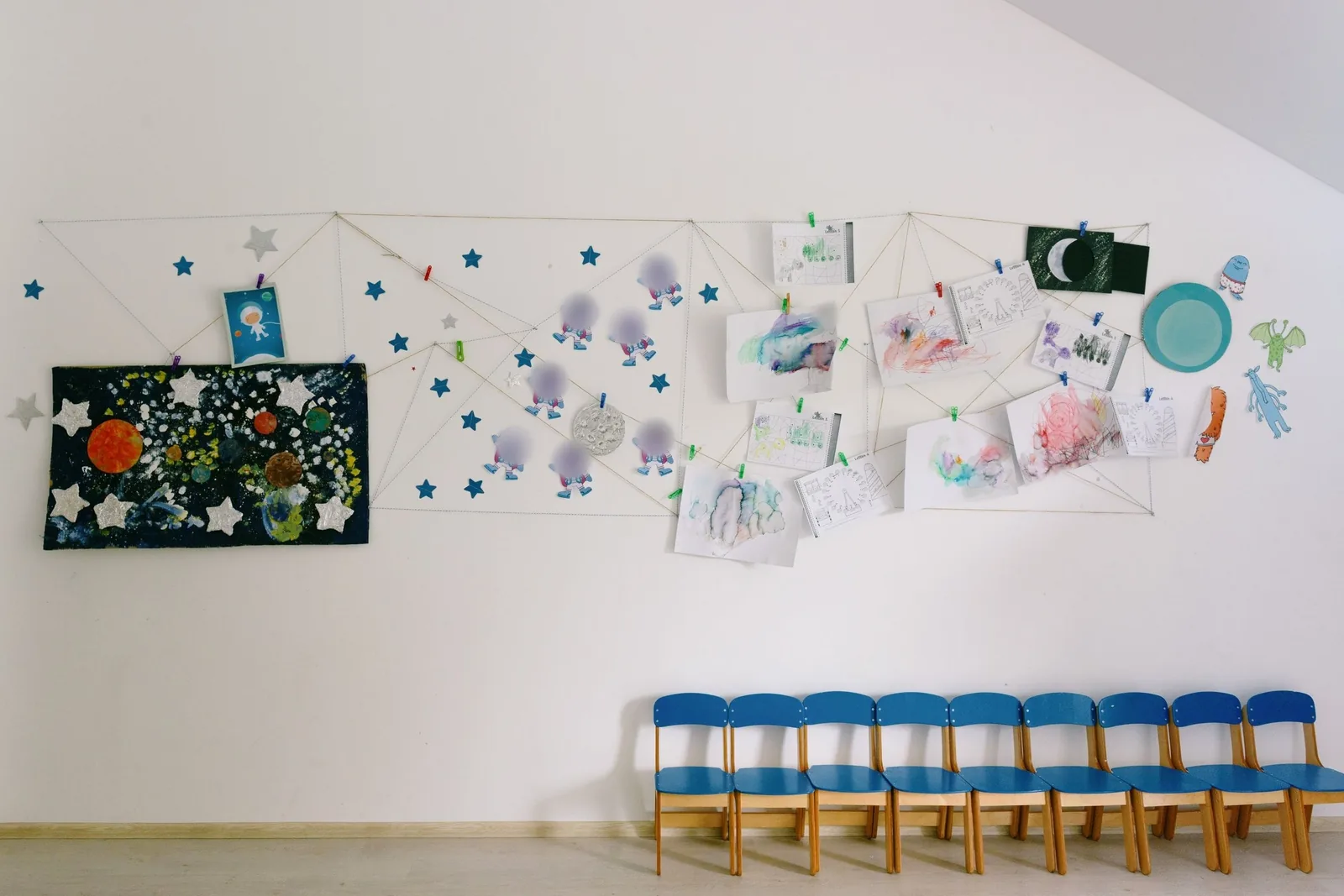
Short answer: Good school social media ideas show daily learning, answer prospective families' questions and keep current parents informed. The Department of Education says private K-12 schools generally don't receive the funding that brings them under FERPA, but consent still does the real work: set a written policy and photo permission levels before posting students.
School social media ideas that start with a parent's questions
A school's feed has two audiences. Prospective families are checking whether your school is the right fit, and current families want to know what happened today and what's coming up. The best school social media ideas serve one of those audiences on purpose: a short clip of the morning routine for the first group, a reminder about Friday's early dismissal for the second.
For a private school, social media is part of enrollment. A parent who has watched your classrooms on Instagram arrives at the tour already picturing their child there. Our enrollment marketing guide covers the full path from first inquiry to enrollment, and our private school marketing page explains how we help schools.
Before the ideas, though, comes the question every school communicator has to settle first: whose photos you're allowed to post.
Does FERPA apply to your private school's social media?
Often, no. FERPA, the federal student privacy law, applies to schools that receive funding under a U.S. Department of Education program. The Department's parent guide to FERPA says "Private and faith-based schools at the elementary and secondary levels generally do not receive such funding and are, therefore, generally not subject to FERPA."
Some private schools do receive Department funds, so check before you assume. For schools that are covered, the FERPA regulations list a student's photograph as possible directory information, which a school may disclose after giving parents public notice of what it designates and of their right to refuse. The Department's FAQs on photos and videos under FERPA add that "Schools often designate photos or videos of students participating in public events (e.g., sporting events, concerts, theater performances, etc.) as directory information and/or obtain consent from the parents or eligible students to publicly disclose photos or videos from these events."
Here's our view: for most private schools, the rule that governs your Instagram isn't FERPA. It's your enrollment agreement, your photo release and the promises you made to families. Families don't read statutes. They notice when their child shows up online after they said no.
This is general information, not legal advice. Your school's attorney should confirm whether FERPA applies to you and review your release form. The same consent question applies to student photos on your website, which our school website design guide covers.
Four levels of photo permission for school social media
To turn consent into everyday decisions, sort posts into four levels, from the safest post to the one that needs the most paperwork. Go only as high as your records allow.
| Level | What you can post | What you need first |
|---|---|---|
| 1. No identifiable student | Hands at work, projects, backs of heads, empty classrooms, teachers who agreed | Nothing beyond staff consent |
| 2. Groups at public events | Wide shots of a concert, game or open house | Your notice to families, with every opt-out honored |
| 3. One identifiable student | A clear photo or clip where one child is the focus | That family's signed photo release, checked before posting |
| 4. Name, quote or feature | A student's name, words or story, or a family testimonial | Written consent for that specific post |
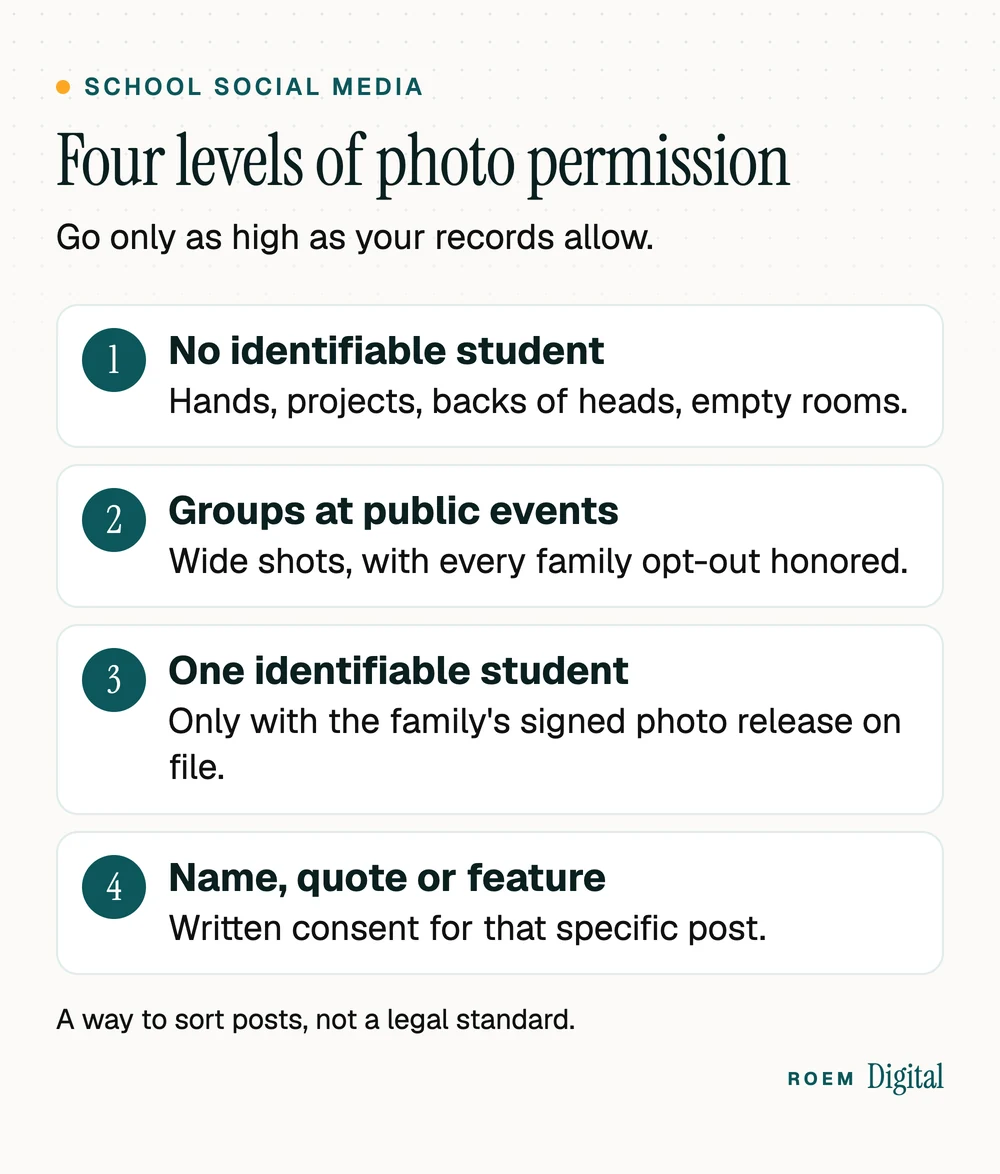
These levels borrow a distinction the Department draws for covered schools: a photo with one student as its focus can be directly related to that student, while one where a student's image is "incidental or captured only as part of the background" generally isn't. The same idea works for kids' ministry at a church, which we cover in our church social media ideas.
Private school social media ideas for every week of the year
With these levels in place, most of a school's best posts sit at the first two. Private school social media ideas that work for both audiences:
- Learning in progress: hands working with materials, a finished project, the classroom set up before the day starts.
- Teachers: a short introduction, why they teach, what a morning looks like in their room, with the teacher's OK.
- Admissions dates: tours, open houses, application deadlines and scholarship help sessions, posted early and repeated.
- Events: wide shots from concerts, games and field days, checked against your opt-out list.
- Help for parents: what to pack, how pickup works, when uniform orders are due.
- Alumni and families: quotes and stories, only with written consent.
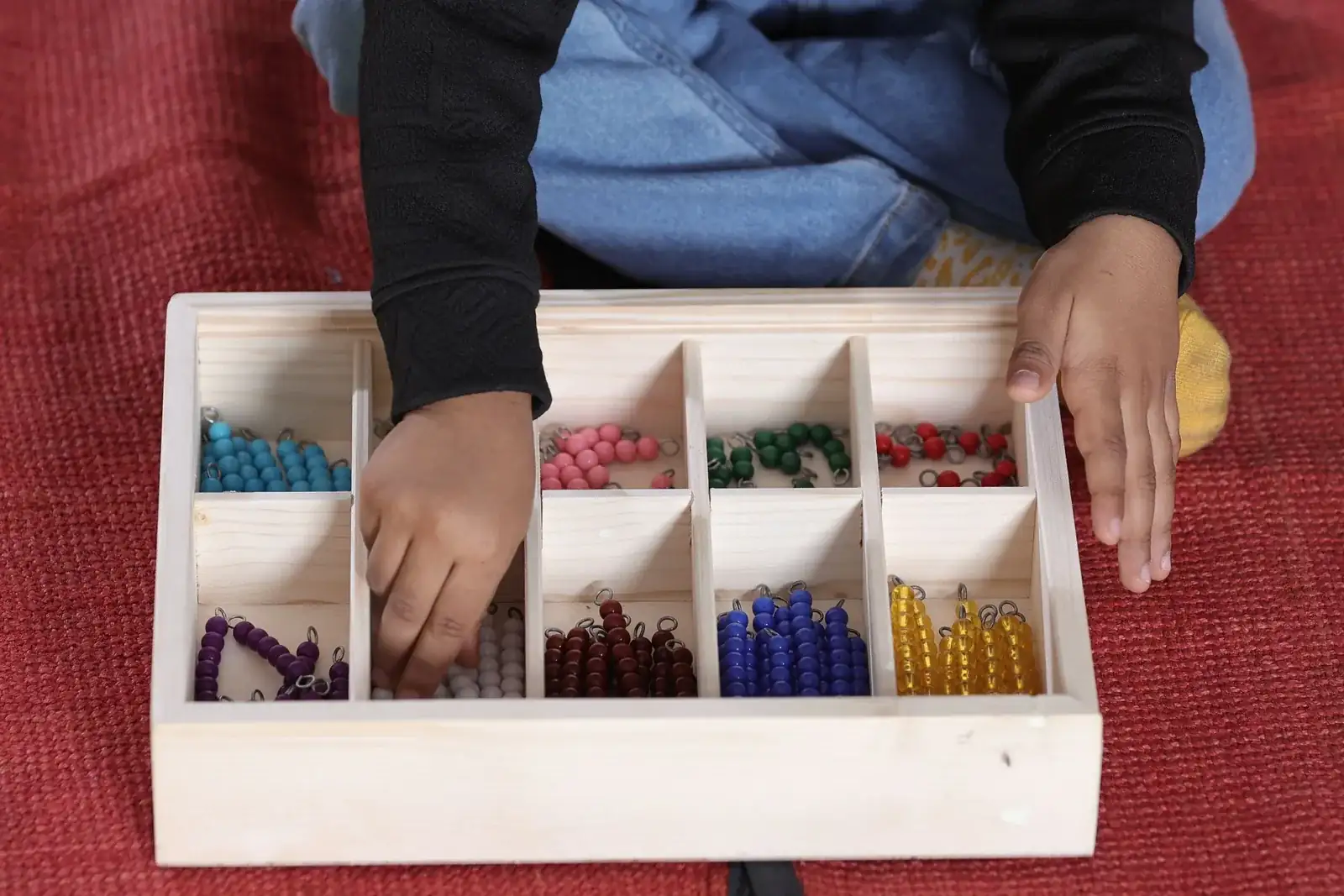
For school Instagram ideas, think about where each audience looks. Quick daily moments and reminders suit current families, while polished feed posts and Reels give prospective families the tour-worthy view. If your school teaches in two languages, post in both. Our guide to what to post on social media has more ways to keep a steady rhythm.
A school year of posts at a glance
| Season | What to post | Who it's for |
|---|---|---|
| Start of the year | Classrooms ready for day one, teacher introductions, how drop-off and pickup work | Current families, and prospects who want a look inside |
| Admissions season, whenever yours runs | Tour and open house dates, a morning in the classroom, answers to common admissions questions | Prospective families |
| Re-enrollment | Highlights of the year so far, upcoming programs, deadlines | Current families |
| End of the year | Projects, performances and celebrations, shot wide or with consent on file | Both, and future families browsing later |
One caution for concert and performance season: the songs students perform are often copyrighted. Meta's Music Guidelines say "Use of music for commercial or non-personal purposes in particular is prohibited" unless you've obtained the right licenses, and that videos may be "blocked, muted or removed" when the music isn't authorized. A photo of the performance, or a short clip of applause and bows, avoids the problem.
Write a school social media policy before the first post
A school social media policy doesn't need to be long. It needs to answer the questions that come up on a busy Tuesday, when a teacher snaps a great photo and wants to post it now. Cover these:
- Who can post to the school's accounts, and who approves posts that show students.
- Who owns the accounts. Two administrators hold full control, each on their own login, and teachers or volunteers get limited access. Facebook's Page access help says a Page needs at least one person with full control to stay active, and our guide to setting up a Facebook business page explains the levels.
- Consent records: where releases are kept, how the opt-out list reaches anyone with a camera, and when it's refreshed each year.
- Names and tags: no student names, tags or locations unless the family gave written consent for that post.
- Staff and parent accounts: what teachers may post about students on personal accounts, and a polite request that parents ask before posting other children from school events.
- Comments and messages: who reads them, how quickly, and what gets hidden or reported.
- Urgent updates: closings and emergencies go to families directly and on the website first, then on social media.
Keep the logins and recovery details with the school, not with a staff member who might leave. Our guide to who owns your marketing accounts walks through that check for each platform.
Turn private school social media into tour requests
Likes don't fill classrooms. Every post aimed at prospective families should point to one place: your tour or inquiry page, not the homepage. Put that link in your profile, tag it with UTM parameters, and count tour requests as key events in Google Analytics, as our guide to tracking calls and forms in GA4 explains.
Then ask every family at the tour how they found you. A parent who says they've followed you on Instagram for a year is telling you the feed is doing its job, even if no single post shows it in a report.
When to talk to a professional about student photos
Some questions belong with your school's attorney or a compliance lead, not your communications team:
- Whether FERPA applies to your school, for example because you receive funding under a Department of Education program.
- Your photo release and enrollment agreement, including how long consent lasts and how a family withdraws it.
- A family's request to remove a photo, especially when a custody order or safety concern is involved. Remove it first, then review.
- Students with disabilities. The Department's parent guide notes that the Individuals with Disabilities Education Act adds confidentiality protections for their records.
- State rules that may apply to your school, which vary from state to state.
The Department of Education's Student Privacy Policy Office publishes FERPA guidance at studentprivacy.ed.gov, along with training and a contact page. Once the rules are settled, our private school marketing page shows how we help with the rest.
How ROEM helps small schools with social media
We're a small, senior team based in Davenport, Florida, working with private schools across Central Florida and nationwide. We built the website for Still We Rise Excellence Academy, a Christ-centered Montessori school in Kissimmee. Our social media management covers the strategy, the content calendar, the creative, the posting and the day-to-day community management, planned around your admissions calendar.
Your school owns every account, and everything in them stays with you.
“ROEM is a first class all systems partner. Their expertise extends from organizational infrastructure, communications, and digital marketing, to web design, graphic design, IT support, and so much more. Still We Rise Excellence Academy is better because of ROEM!”
Frequently asked questions
Does FERPA apply to private school social media posts?
Usually not. The Department of Education says private and faith-based K-12 schools generally don't receive the federal funding that triggers FERPA, so they're generally not subject to it. Some do receive such funds, so check with your attorney. Either way, your photo release and your promises to families still govern what you post.
Can a school post photos of students on social media?
Yes, with the right permission. Schools covered by FERPA may treat photos as directory information after notifying parents and honoring opt-outs, or get parents' consent, as the Department's photo FAQ notes. Schools outside FERPA rely on their own release forms and enrollment agreements. Post identifiable students only when the family's consent is on file.
What should a private school post on Instagram?
Learning in progress, teacher introductions, admissions dates, event highlights and practical tips for current parents. Hands, projects and wide shots cover most days without identifying a child. Save individual student features for families who gave written consent for that specific post, and keep a record of it.
What should a school social media policy include?
Who can post and approve, who owns the accounts, where consent records live and how opt-outs reach photographers, rules on names and tags, guidance for staff and parent accounts, how comments are moderated and how urgent updates are shared. Keep it short enough that staff actually read it.
How often should a school post on social media?
Pick a pace your team can keep through the busiest weeks of the school year. A few posts a week, plus quick daily moments, is a workable start for a small school. Steady posting through admissions season matters more than a burst during the first week of classes.
What should we do if a parent asks us to remove a photo?
Take it down promptly, thank them and update your opt-out list so the photo isn't reused. If the request involves a custody or safety concern, bring in your administrator and attorney. A quick, respectful response protects the family's trust, which is worth more than any single post.